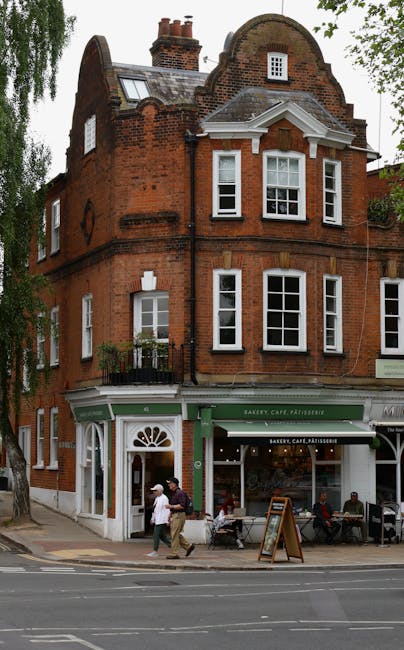
Flask Walk commercial removals for Hampstead shops and offices
Posted on 30/06/2026

If you are moving a shop, clinic, studio, or office on or near Flask Walk, you already know the awkward part is rarely the boxes. It is the timing, the access, the neighbours, the stairwells, the parking, the fragile stock, and the fact that business still has to keep moving while all of this happens. That is exactly why Flask Walk commercial removals for Hampstead shops and offices need a practical, local approach rather than a one-size-fits-all van-and-go service.
This guide breaks down how commercial removals in this part of Hampstead really work, what to plan for, where the risks usually appear, and how to keep the move calm enough that Monday morning does not turn into a minor disaster. To be fair, most business moves are simply a series of small problems handled in the right order.
Why Flask Walk commercial removals for Hampstead shops and offices Matters
Flask Walk sits in a part of Hampstead where streets can feel tight, circulation can be busy, and buildings often have their own quirks. That matters because commercial removals are not just about shifting furniture. They are about protecting stock, equipment, client files, fixtures, and trading continuity. If you run a shop, salon, design studio, or small office, a poor move can create avoidable downtime and costly disruption.
Hampstead itself brings a particular mix of period buildings, mixed-use properties, and local foot traffic. A move in this kind of setting needs more coordination than a straightforward unit on an industrial estate. You may need to consider narrow pavements, limited waiting space, awkward entrances, shared access routes, and the simple fact that people still need to get past your door. If you have ever tried to carry a desk through a corridor while a delivery driver is waiting outside and a customer is asking a question, you will know the feeling.
That is why a well-planned commercial move is valuable. It reduces interruption, protects the things that keep the business running, and helps staff settle into the new space without chaos. For many business owners, the real gain is not speed for its own sake; it is control. And control, in a move, is gold.
If you are also thinking about the wider area context, it can help to read about local Hampstead insights and the broader setting described in this Hampstead suburb guide. That kind of local awareness makes the practical side of moving feel much less abstract.
How Flask Walk commercial removals for Hampstead shops and offices Works
A commercial removal usually starts long before moving day. In a good setup, the process is part survey, part logistics plan, part risk management. For a Flask Walk business move, the first step is usually to understand the building layout, access restrictions, the volume of items to move, and any items that need special handling.
From there, the move is broken into workable stages. That often includes packing non-essential items early, labelling rooms or departments clearly, protecting floors and doorframes, and sequencing the load so the most important or most fragile items are handled first. The idea is simple enough: move the business without scrambling the business.
Commercial removals also tend to be more time-sensitive than domestic ones. Shops may need to close for a short window. Offices may need to maintain access to emails, phones, and key systems. A retail environment might need to clear stock overnight, while an office may only want a weekend move. That is where planning really earns its keep.
In practical terms, a strong removal plan will usually cover:
- site access and parking arrangements
- parking restrictions or permit considerations
- packing sequence and ownership of each task
- handling for fragile, bulky, or high-value items
- backup plans if access or timings change
- setup priorities for the new premises
For smaller business moves, a flexible vehicle-based service can be enough. For larger offices or multi-zone retail spaces, the planning becomes more layered. If you want a sense of the wider service landscape, the overview at services overview and the local removal services in Hampstead pages are useful reference points.
Key Benefits and Practical Advantages
The best commercial removals deliver more than muscle. They make a complicated day feel manageable. That alone is worth something when staff are trying to stay productive and customers still need answers.
Here are the main benefits businesses usually care about:
- Less downtime: A structured move means you can reopen sooner and avoid dragging the process across several days.
- Better protection for assets: Desks, shelving, stock, computers, printers, and display items are less likely to be damaged when packed and loaded correctly.
- Cleaner handover: Shops and offices are easier to hand back when everything has been removed systematically.
- Lower stress for staff: People can focus on their actual jobs instead of improvising with tape, boxes, and guesswork.
- More predictable costs: Planning tends to reveal the real work early, which helps reduce nasty surprises.
There is also a softer benefit that gets overlooked: confidence. Once you know the move is under control, the whole team tends to calm down. The tone in the room changes. Phones get answered more patiently. Small decisions stop feeling huge. It sounds minor, but it matters.
If your move involves office furniture or stock relocation, you may also find it helpful to compare related support like office removals in Hampstead and furniture removals. For many businesses, those services overlap in all the useful ways.
Who This Is For and When It Makes Sense
This kind of move is for any local business that needs to relocate without turning the working week upside down. In practice, that can mean quite a wide group:
- independent shops and boutiques
- small offices and professional practices
- creative studios and agencies
- consultants moving from serviced space to private premises
- salons, clinics, and treatment rooms
- cafe or hospitality operators with dry goods, fixtures, or back-of-house equipment
It also makes sense when the move has a deadline. Lease end dates do that, and so do refurbishments, changes in staffing, or a decision to grow into a better layout. Sometimes the move is not strategic at all; it is just what the building situation requires. Let's face it, landlords and leases do not always ask politely.
Smaller businesses may only need a straightforward collection and delivery service, especially if the volume is low and the items are easy to carry. In those cases, a flexible option such as man with a van in Hampstead or man and van support can be enough. Bigger, more sensitive moves usually need a fuller plan with packing and staging.
One good rule: if the loss of one day's trading would hurt, or if your equipment is expensive to replace, treat the move as a project rather than a lift-and-shift.
Step-by-Step Guidance
Below is a sensible, real-world sequence for organising a commercial move around Flask Walk. It is not the only way to do it, but it is the route that usually keeps things tidy.
- Map the site properly. Walk the current premises and the new one. Measure doorways, stairs, lifts, awkward corners, and loading points. Note anything heavy, fragile, or time-sensitive.
- Decide what moves and what does not. A move is a perfect moment to clear dead stock, old paperwork, broken chairs, and surplus kit. Less stuff equals less stress. Simple, but true.
- Set a timetable. Work backwards from your ideal move day. Allow time for packing, disconnection, cleaning, and reopening.
- Label by function, not just by room. For offices, label items by team, desk, or system. For shops, use labels that reflect stock type, display use, or storage zone.
- Prepare your essentials box. Keep cash float items, keys, chargers, documents, toolkit basics, and a few cleaning supplies to hand.
- Protect high-value items. Glass, artwork, screens, branded displays, and sensitive paperwork need extra care. If you have unusual items, check whether specialist handling is needed.
- Plan access and parking early. This is the bit people leave too late. Around Hampstead, access planning can make or break the day.
- Load in the right order. Put the essentials on last, so they come off first. Keep things grouped logically, not just stacked randomly because there was space.
- Check the new premises before closing the day. Make sure the critical areas are ready: power, internet, keys, alarms, and where staff can actually work.
- Test and settle. Once in place, check everything. A bit of wobble now is easier to fix than two weeks later.
Some of the best moves I have seen were not the fanciest. They were the ones where the owner wrote down every small task, then crossed them off one by one. Not glamorous, but effective. Very effective.
Expert Tips for Better Results
Small choices make a big difference with commercial removals in a place like Flask Walk. A few things consistently improve the outcome.
- Start with the hardest items first. If there is a safe, heavy, awkward, or unusually shaped item, plan for it early rather than leaving it as an end-of-day surprise.
- Use consistent labels. One system, everyone follows it. Mixed labels create confusion faster than you would think.
- Keep a room-by-room or zone-by-zone inventory. It sounds dull, but it is a brilliant way to spot missing items.
- Separate customer-facing materials from internal archive items. That saves time when you need the business to look open again quickly.
- Choose the right timing. Early morning, evening, or weekend work can be the difference between a smooth handover and a crowd outside your door.
- Protect floors and entrances. In Hampstead, many business premises sit in buildings that deserve a bit of respect. Also, nobody wants a scratched threshold before they have even unpacked.
It is also worth thinking about specialist items. For example, a shop with display cabinets or a studio with an upright piano should consider expert handling rather than general lifting. If that sounds familiar, the dedicated piano removals service is a good example of the kind of specialist support some premises need.
If the move has sustainability goals, ask how reusable packing, recycling, and waste segregation are handled. A cleaner move is often a more efficient one too. There is something satisfying about that, even if nobody says it out loud.

Common Mistakes to Avoid
Most moving problems are predictable. That is the annoying part. The upside is that predictable problems are avoidable.
- Leaving packing too late. The last 48 hours before a move are not the time to start hunting for labels.
- Underestimating access issues. A route that looks fine on paper can be awkward in real life, especially with busy pavements or tight corners.
- Not assigning one decision-maker. Too many voices and nothing gets decided. One point of contact usually helps a lot.
- Forgetting IT and connectivity. Offices especially can lose a full day if internet, phones, or devices are not prioritised.
- Moving unnecessary items. Every extra box costs time and attention.
- Ignoring insurance and liability questions. If equipment is valuable or sensitive, confirm how it is covered before anyone lifts anything.
Another classic mistake is assuming the old premises and new premises will be equally easy to work in. They usually are not. One might have a narrow doorway, the other a longer carry, and suddenly the move that looked straightforward now needs a different vehicle or different timing.
It helps to read the business terms and safety information before booking anything. That sounds plain, but it saves awkward conversations later. The pages on insurance and safety, health and safety policy, and terms and conditions are the kind of pages that tell you what to expect.
Tools, Resources and Recommendations
You do not need a huge toolkit, but you do need the right basics. The smoothest commercial moves usually rely on a few practical items and a clear plan.
| Tool or resource | Why it helps | Best use case |
|---|---|---|
| Strong boxes and crates | Protects stock, files, and devices during transport | Shops, offices, archives, and mixed-use premises |
| Permanent labels and markers | Makes unpacking faster and reduces misplacement | Team moves, multi-room premises, stock sorting |
| Furniture blankets and wrap | Prevents scuffs and surface damage | Desks, shelving, counters, cabinets |
| Floor protection | Helps keep entrances and walkways clean | Period buildings, shared corridors, customer-facing spaces |
| Inventory sheet | Tracks items from source to destination | Any move where accountability matters |
For packing support, the packing and boxes guidance is useful if you want to understand what tends to work best in real moves. If you need a smaller-scale setup, removal van support can be a sensible fit for compact commercial loads.
And if the move is urgent, it is worth knowing that same-day or short-notice support can be useful in a pinch, provided the logistics are realistic. Nobody wants heroics when what they really need is a clean handover.
Law, Compliance, Standards, or Best Practice
Commercial removals are practical jobs, but they still sit inside a framework of responsibility. You do not need to become a compliance expert to move premises well, yet you should respect the basics.
At a minimum, businesses should think about:
- Health and safety duties: Make sure lifting, loading, and access arrangements are managed sensibly.
- Insurance clarity: Know what covers transit, handling, and third-party risks.
- Data and document protection: Offices in particular should separate confidential records and controlled materials.
- Premises access rules: If building management, landlords, or neighbours need notice, give it early.
- Waste and recycling: Old fixtures, packaging, and unwanted stock should be dealt with responsibly.
For many businesses, the safest approach is to work with removal specialists who already have clear procedures in place and can talk plainly about risk. That is where trust really starts to show. If you are comparing providers, this guide to Hampstead removal companies and the movers page can help you think about service levels in a grounded way.
Best practice is not about overcomplicating things. It is about removing uncertainty. One well-run move is worth five half-planned ones.
Options, Methods, or Comparison Table
Different business moves need different approaches. The right choice depends on volume, urgency, access, and how sensitive the contents are.
| Method | Best for | Strengths | Trade-offs |
|---|---|---|---|
| Full commercial removal service | Shops, offices, and larger mixed contents | Structured planning, less downtime, better protection | Usually needs the most preparation |
| Man and van approach | Smaller loads or simple relocations | Flexible, practical, often quicker to arrange | Less suited to complex or high-volume moves |
| Partial move with specialist handling | Businesses moving only selected items | Good for staging, phased moves, or sensitive items | Requires more coordination between teams |
| Same-day move | Urgent relocations or short-notice changes | Fast response, useful for time pressure | Less flexible if access or packing is not ready |
In simple terms, small and tidy jobs can be handled quickly. Bigger or more delicate moves need more staging. That is not a sales line, just common sense.
For urgent jobs, the local same-day removals option may suit some business scenarios, while standard commercial planning works better for more layered office and retail relocations.
Case Study or Real-World Example
Here is a realistic example based on the kind of move businesses in Hampstead often face.
A small independent shop on a narrow Hampstead street needs to move a display counter, shelving, boxed stock, signage, a card payment terminal, and a few storage units to a nearby premises on Flask Walk. The shop cannot close for long, because weekend trade matters. The owner has one day to clear the old unit and open the new one in a workable state.
The sensible response is not to improvise on the day. Instead, the stock is sorted a few days in advance, with non-essential items packed first. The display counter and shelving are wrapped carefully. The payment terminal, keys, and opening paperwork are set aside in a separate essentials bag. Access is checked before the move, and the most awkward items are loaded when the street is quieter. At the new unit, the counter and core stock are placed first so the shop can function quickly, even if the decorative bits are still waiting in boxes.
The move is not glamorous. No one is clapping as the last box comes in. But the shop reopens on time, the team can work, and the owner spends the afternoon serving customers instead of searching for labels and wondering where the till lead went. That is a win.
If you are comparing this with a flat move or a home move, the practical issues around parking and access are often similar. You may find the NW3 parking and permit advice helpful, as well as the local notes in Rosslyn Hill move guidance and the wider narrow streets and stairs article. Different context, similar headaches.
Practical Checklist
Use this checklist to stay sane in the run-up to the move. Tick it off in order, or at least close to it.
- Confirm move date, time window, and access arrangements
- Identify one responsible person for decisions on the day
- Measure entrances, stairs, lifts, and any awkward turns
- Sort items into keep, move, recycle, and dispose groups
- Pack and label boxes by room, team, or function
- Back up important files and separate confidential documents
- Protect high-value or fragile items with suitable wrapping
- Prepare an essentials box for keys, chargers, and critical tools
- Notify staff of the sequence and timing
- Check parking, permits, and any loading restrictions
- Prepare the new site with power, access, and basic cleaning done
- Walk through the new premises after delivery to confirm everything is in place
If you want to think about the move as part of a broader Hampstead relocation journey, the general removals in Hampstead page can also help you see how the pieces fit together.
Get a free quote today and see how much you can save.
Conclusion
Flask Walk commercial removals for Hampstead shops and offices are easiest when they are treated as a business-critical project, not just a transport task. Once you accept that access, timing, protection, and continuity all matter, the move becomes much more manageable. The aim is not perfection. It is a calm, controlled transition that lets your shop or office keep doing what it does best.
In practice, the best results come from early planning, clear labelling, sensible packing, and realistic expectations about the local environment. Hampstead has charm in abundance, but it also has a few logistical quirks. That is part of the character, really. Get those details right, and the rest has a habit of falling into place.
And when the last box is in, the kettle is on, and the new space starts to feel like yours, it all makes a bit more sense.